FREE PRINTABLE GUIDE
Take the storm-season checklist with you
Use the visual guide online or download the two-page A4 checklist for a calm, ground-level walk around the property.
Walk the property from the ground
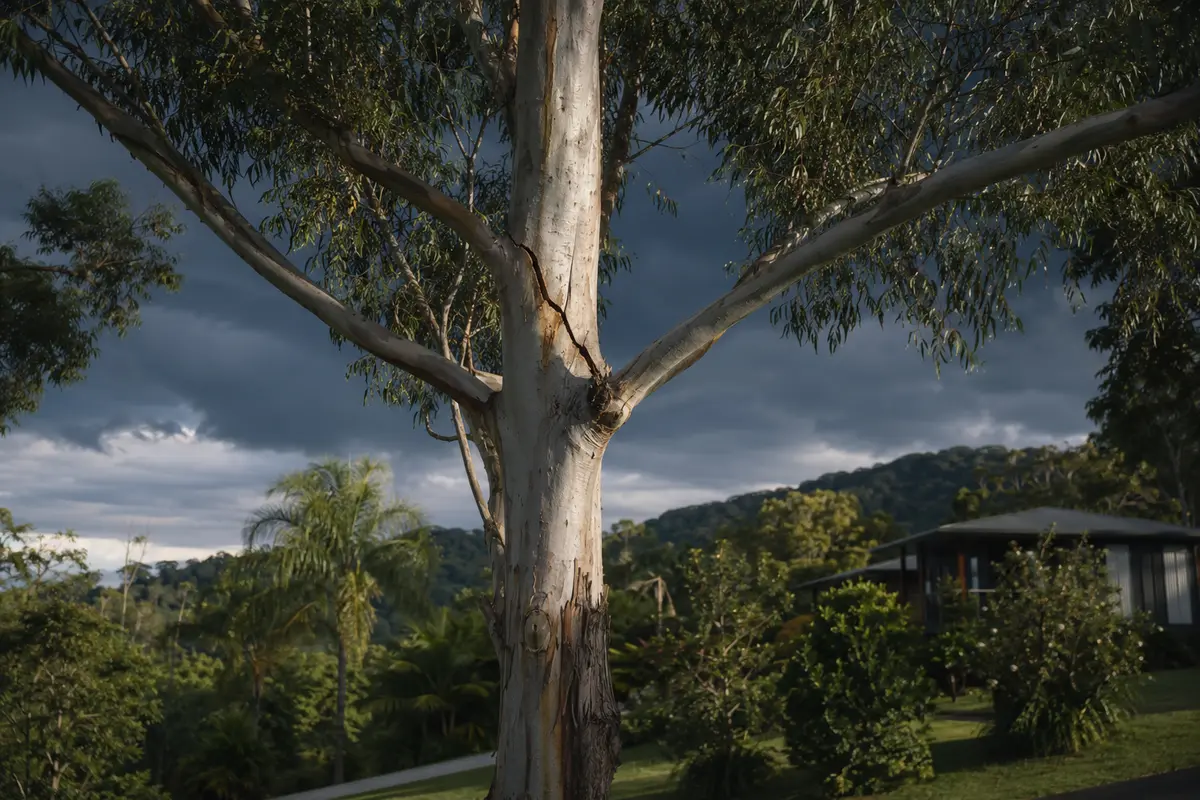
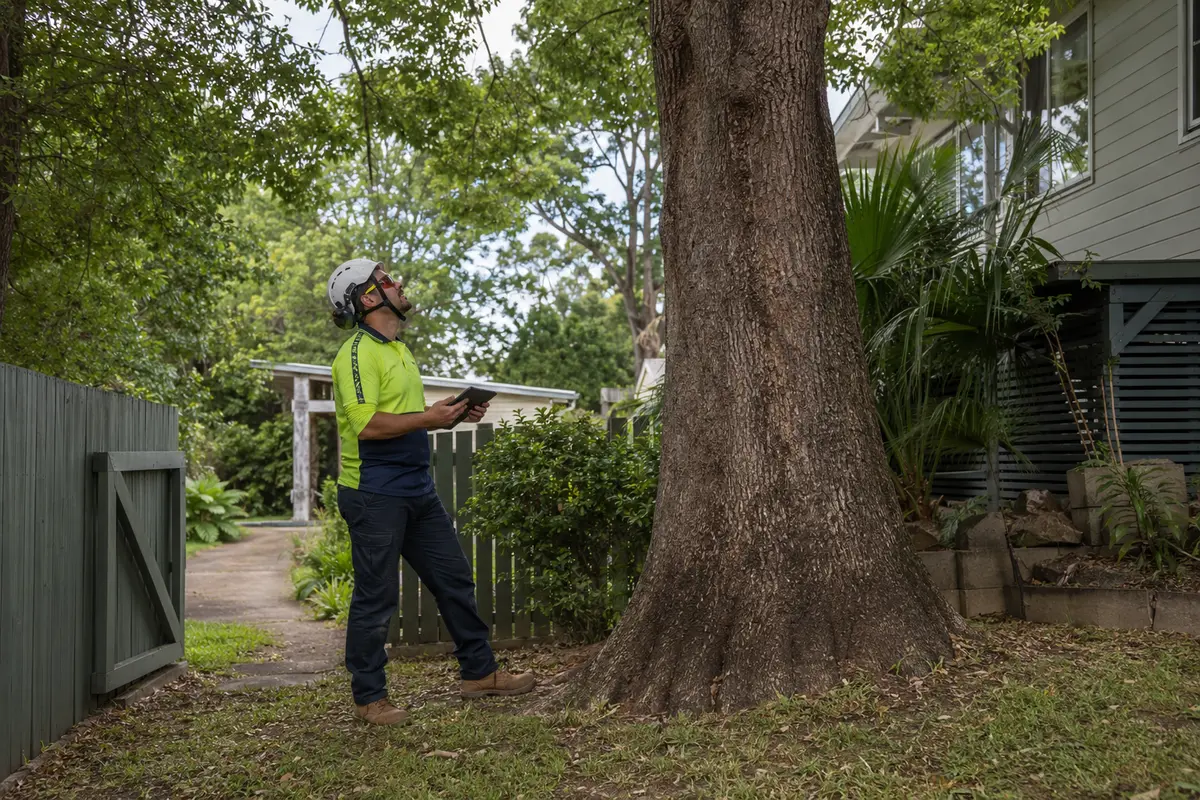
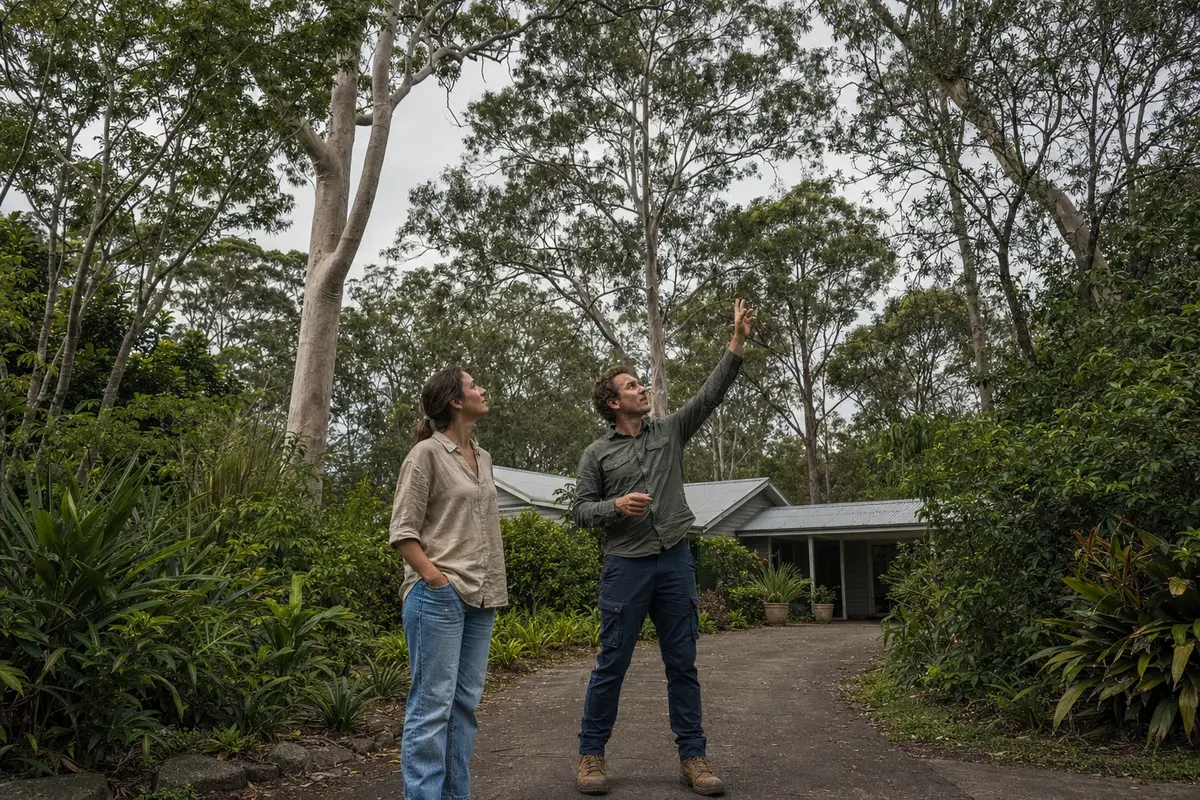
Choose calm daylight and look at each significant tree from several positions. Note dead or broken branches, fresh cracks, changes in lean, lifted soil, hanging limbs and canopy sections that have declined. Include trees outside the fence that could affect access, while remembering you may not own or control them.
Use dated photographs to track change. Do not climb, use a ladder, cut near wires or stand beneath suspicious branches. An inspection is valuable only when it does not create a new risk.
Review the things a branch could strike
Move caravans, trailers, play equipment and outdoor furniture away from questionable limbs where practical. Keep gutters clear, check that drainage paths are open and avoid storing essential vehicles beneath large branches during forecast severe weather.
Consider access after a storm. A tree across the only driveway may prevent vehicles leaving even when it is far from the house. Explain this priority when arranging preventative work.
Arrange planned work early
If pruning, deadwood removal or assessment is recommended, schedule it with enough time for a careful method and any approvals. Demand rises sharply after damaging weather, and urgent conditions can limit safe access.
Avoid indiscriminate topping as a supposed storm-proofing treatment. Poor cuts can produce decay, sun exposure and weak regrowth. The work should target identified defects or clear objectives.
Prepare information for an emergency call
Save the electricity network fault number and know when to call emergency services. Record your address, gate access, hazards, insurance details and a tree-service contact. After a storm, explain whether the tree has fallen, is moving, is on a structure or is near electricity.
Photos should be taken only from a secure location. A damaged tree may remain loaded against another branch or building and can shift as wind changes.
Practical checklist
✓ Keep people away from damaged trees✓ Assume fallen wires may be live✓ Do not cut a tree supporting or touching a wire✓ Avoid working from roofs or ladders in wet conditions✓ Follow emergency-service and network directionsWhat to do after the weather passes
Reinspect from a safe distance even if the property appears normal. Look for newly hanging branches, split unions, root movement and debris caught overhead. Prioritise hazards to people and access before cosmetic clean-up.
Document damage for your insurer before non-urgent removal where safe and relevant. Emergency make-safe work may differ from complete removal and final clean-up, so confirm the immediate scope and what follow-up is required.
KEEP EXPLORING
Advice connected to local help
COMMON QUESTIONS
Questions about this topic
Should every large tree be removed before storm season?+
No. Size alone does not determine risk. Condition, structure, exposure and what could be struck all matter. A healthy large tree may offer substantial shade and environmental value.
Who do I call if a tree is on powerlines?+
Keep well clear and contact the electricity network operator or emergency services as directed. Do not approach the tree or anything touching it.
Can storm work be completed in high winds?+
Some urgent actions may need to wait until conditions are safe. The crew must consider wind, rain, lightning, tree movement and access before starting.
TALK ABOUT YOUR TREE
Get advice for the actual site
Share the suburb, tree, access and what has changed so the next step can be assessed properly.
Contact us →