
UNDERSTANDING THE JOB
When stump grinding may be needed
Old stumps can create mowing obstacles, trip hazards and awkward dead space. They may also interfere with fences, driveways, drainage, landscaping or a planned building project. Grinding is appropriate when the goal is to lower the stump and nearby root flare without digging out the whole root network.
The required depth depends on what happens next. A shallow grind may be enough for mulch or turf, while paving, footings, replanting or service installation may require a deeper and wider excavation. This intended use should be explained before quoting because it affects time and machine selection.
Freshly cut stumps are generally easier to identify and access, but old weathered stumps can also be ground. Soil, stones, embedded wire, nails, concrete and previous fence work around the trunk can slow the job and damage cutting teeth.
If a tree or branch presents an immediate danger, keep people away from the area. Contact emergency services or the electricity network where public safety or powerlines are involved.
THE WORK PROCESS
How professional stump grinding is approached
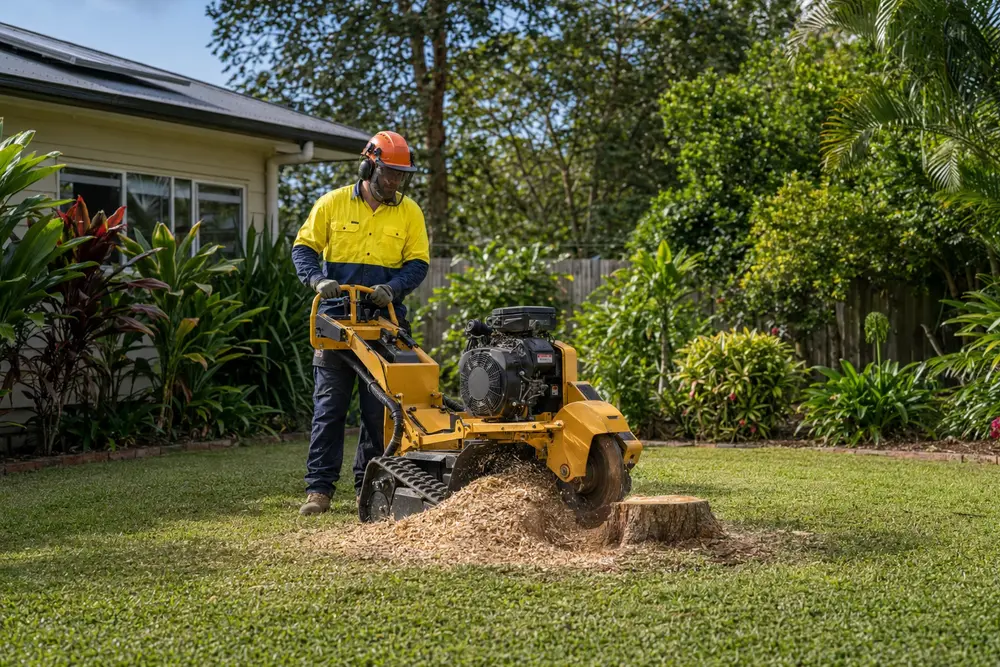
Before grinding, the area is checked for known underground services, irrigation, lighting, drainage and other obstacles. Loose stones and debris are cleared. The grinder is positioned with an exclusion zone because high-speed cutting teeth can eject chips and hidden material.
The cutting wheel moves progressively across the stump, taking controlled passes until the specified area and depth are reached. Large surface roots can be chased where included, but this is not the same as removing every root extending through the property.
The result is a mixture of wood fibre and soil. Some grindings can be used to fill the cavity temporarily, but the material settles as it decomposes. Excess can be removed or left in a nominated pile depending on the quote.
Assessment comes before equipment
A chainsaw, chipper or elevated platform does not determine the plan; the site does. A useful assessment considers the tree’s condition, the people and property that could be affected, access for workers and machines, the likely movement of cut material and the final result the owner expects. This is why two trees of similar height can require very different methods.
Photographs are valuable for an initial conversation, particularly when they show the full tree, trunk base, surrounding buildings and access route. They do not replace close inspection where structural condition, branch loading or underground constraints could change the work. A final price and safe-work method should be based on enough information to avoid surprises on arrival.
COST AND PREPARATION
What affects the quote
Tree-service pricing is driven by time, people, equipment, access, risk and the amount of material to process. Height alone is a poor guide. A tall tree with a clear drop zone and easy truck access may be simpler than a smaller tree growing between a pool, house and boundary fence. Quotes should be compared by scope rather than the final figure alone.
- ✓Gate width, steps, slopes and soft ground determine which grinder can reach the stump.
- ✓The final use of the site determines grinding depth and whether lateral roots need attention.
- ✓Underground services must be located and communicated; a stump can conceal irrigation, electrical conduits or old fencing.
- ✓Grinding does not guarantee that every species will stop producing shoots; treatment or follow-up may be necessary for suckering trees.
Useful information for an enquiry includes the property suburb, number of trees, approximate size, what concerns you, whether branches are over structures, the narrowest access point and whether material is to be removed. Wide photographs from several angles are generally more informative than close-ups with no scale. Mention dogs, locked gates, tenants, shared driveways, restricted parking and any known underground services before the visit.
Preparing the property
Before the crew arrives, move vehicles, furniture, toys and portable garden items from the agreed work and access zones. Keep pets secured and ensure another contractor is not scheduled to occupy the same area. The crew should confirm any additional exclusions after arrival. Do not remove barricades or enter the work zone to collect timber until the person supervising the job says it is safe.
Weather and ground conditions matter. Strong wind can make climbing or elevated work unsafe, while saturated lawns may not carry machinery without damage. A postponement for conditions is a safety decision, not poor planning. If property access is vulnerable after rain, discuss alternative equipment, ground protection or a suitable dry-weather window during quotation.
A CLEAR SCOPE
What the written quote should explain
A quote should identify the tree or work area, describe the agreed result and state what happens to branches, logs, mulch and the stump. It should also distinguish optional items from the base price. Clear wording protects both the property owner and the operator because the crew can work to an agreed outcome rather than interpreting a vague instruction such as “tidy the tree.”
Ask whether the price includes travel, machinery, waste fees and site clean-up, and whether anything could reasonably create an additional charge. Confirm the operator has appropriate insurance for the work being offered. Where permits, traffic management, electricity-network involvement or specialist machinery may be required, the quote should say who arranges them and whether their cost is included.
Clean-up and material choices
“Clean-up” can mean different things. A basic tree-work clean-up normally collects branches and rakes loose debris from the immediate work zone; it does not necessarily restore damaged turf, remove sawdust from garden beds, split firewood or haul every leaf from the property. Agree on practical expectations before work begins. If mulch is staying, nominate an accessible location and consider the volume that a mature canopy can produce.
LOCAL CONTEXT
Tree work in Lismore and the Northern Rivers
Lismore properties range from compact residential blocks in Goonellabah to larger sloping and semi-rural sites around Wollongbar, Alstonville, Richmond Hill, Clunes and nearby districts. Access, soil moisture, established gardens and proximity to neighbours vary significantly. A local service page should not promise that one method suits every address; it should help owners provide the information needed for a site-specific plan.
Subtropical growth and periods of intense rain can produce heavy canopies, rapid regrowth and soft ground. Storms can expose defects that were not obvious in calm weather, while prolonged wet conditions may affect roots and equipment access. Regular observation from the ground—particularly after severe weather—helps identify broken branches, fresh cracks, changes in lean and other reasons to seek advice.
Tree ownership does not remove the need to consider planning controls, neighbours, wildlife, utilities and public safety. Rules and property constraints can change, so check the current requirements that apply to the address rather than relying on general online information. A responsible operator should be willing to define the work clearly and pause where approval or another authority is required.
Choosing a tree-service operator
Look for clear communication, relevant experience, suitable equipment and insurance appropriate to the work. A professional conversation should cover the objective, method, exclusions, debris and price without pressure. For complex pruning or tree-risk questions, ask what arboricultural knowledge informs the recommendation. The cheapest quote is not good value if it omits essential machinery, leaves an unclear clean-up obligation or proposes cuts that create repeat problems.
Keep the quote and any supporting photographs. Walk through the finished work before the crew leaves if it is safe to do so. Raise questions about the agreed scope promptly and ask for future inspection or maintenance advice. Good tree management is often a sequence of sensible decisions rather than a single dramatic visit.
FREQUENTLY ASKED QUESTIONS
Stump grinding FAQs
How deep does stump grinding go?
Depth is agreed for the intended outcome and limited by the machine, soil and underground hazards. A standard landscape grind removes the visible stump below surrounding ground, while construction or replanting may require a different scope. Make sure the quote gives a depth or describes the finished use.
Does grinding remove all the roots?
No. It removes the central stump and any specifically included surface roots. The deeper and more distant root system remains underground and gradually breaks down. Complete root excavation is a different, far more disruptive earthmoving task.
Can I plant another tree in the same spot?
It is often better to offset the new tree because remaining roots, settling grindings and altered soil can make the exact position unsuitable. If replanting is the objective, request a wider, deeper grind and seek advice on soil preparation and an appropriate replacement species.
What happens to the wood chips?
Grinding creates a bulky mix of wood fibre and soil. It can be left for garden use, used to partly backfill the hole or removed by agreement. Because it settles substantially, imported soil may be needed before establishing lawn or paving.
Can the grinder fit through a side gate?
There are different machine sizes, including compact units, but access must be measured rather than assumed. Provide the narrowest gate width, steps, tight turns and slope information with your enquiry so a suitable machine can be considered.
READY TO TALK?
Get a clear quote for your property
Describe the tree, your suburb and what you would like to achieve. Photos and access details help make the first assessment more useful.
Contact us →