Tree size is only the starting point
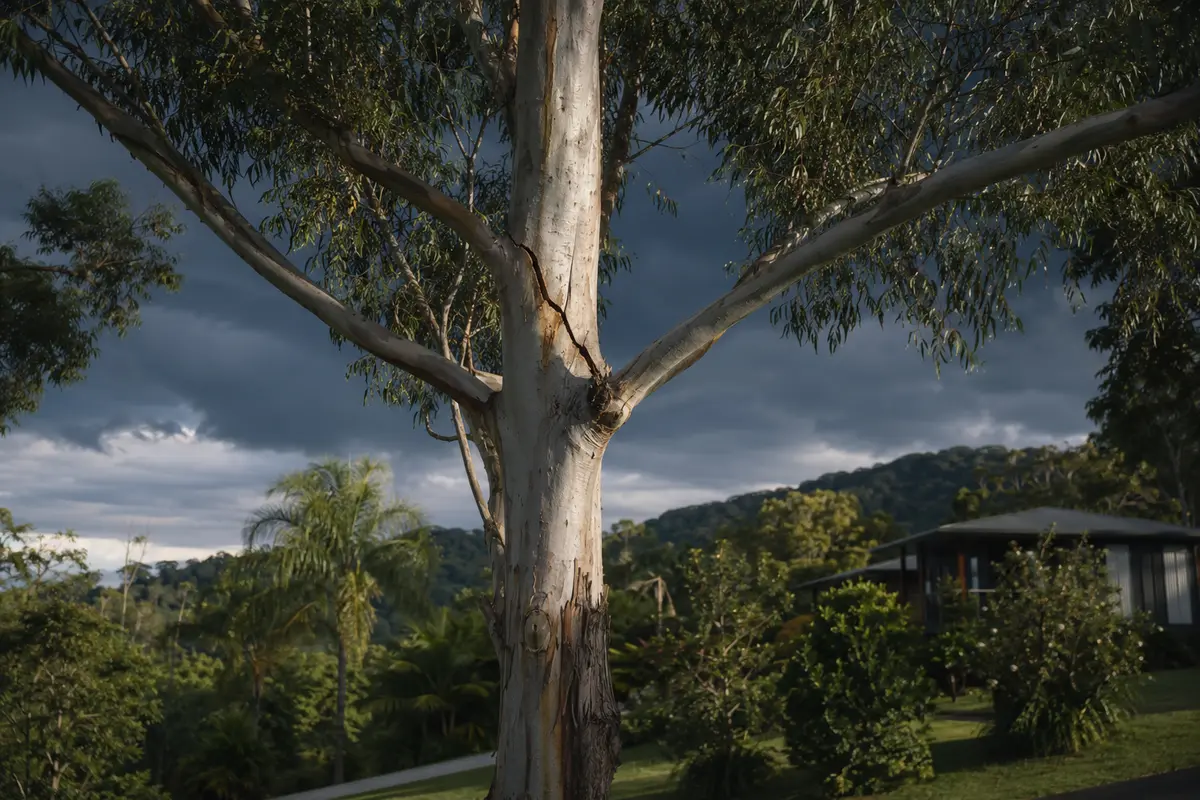
Height, trunk diameter and canopy spread affect the volume and weight of material, but they do not dictate the method. A large tree in an open paddock may allow controlled felling in bigger sections. A smaller tree enclosed by a house, pool, fence and garden may need every piece lowered by rope.
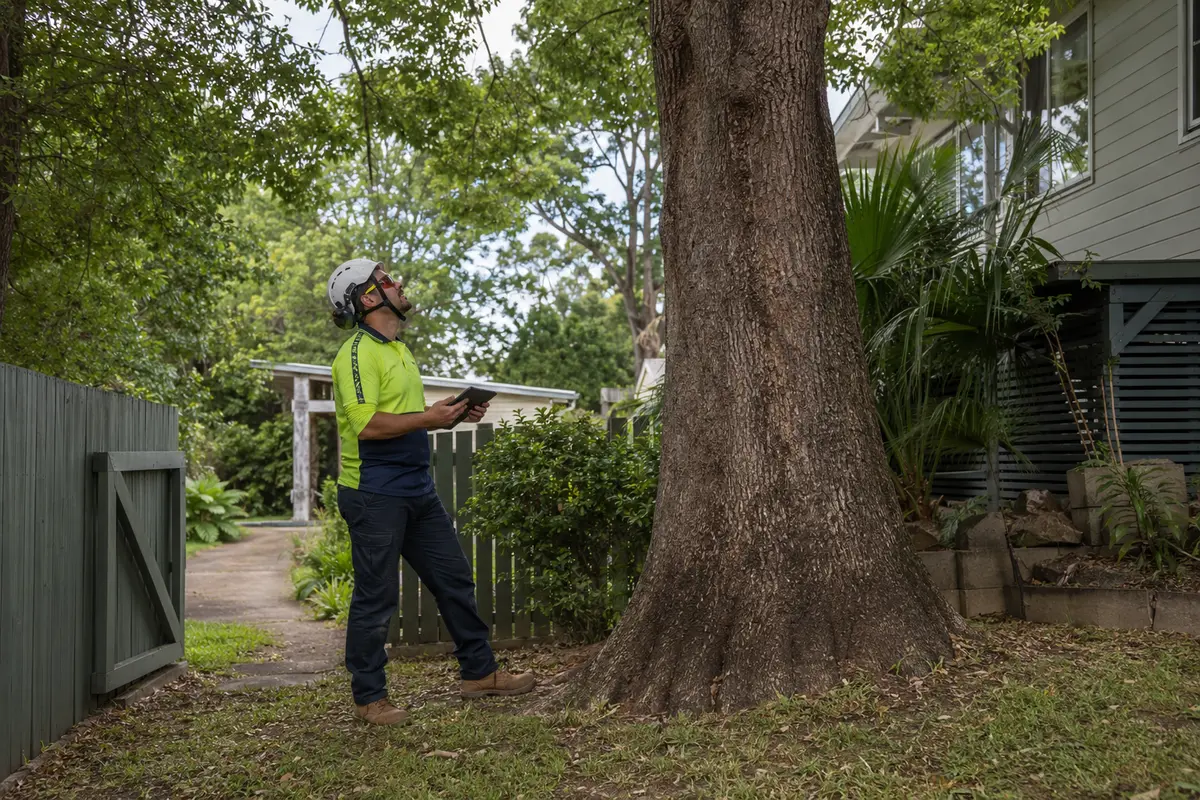
Species and condition matter too. Dense hardwood sections can be heavy; brittle, dead or decayed timber may not tolerate normal climbing or rigging forces. The assessment should match the proposed method to the tree as it stands.
Access changes labour and equipment
A wide driveway may allow a chipper, elevated work platform or compact loader close to the tree. Narrow side access can require branches and logs to be cut smaller and carried farther by hand. Steps, steep slopes, soft lawns and low overhead clearance all add practical constraints.
When requesting a quote, measure the narrowest gate and photograph the full access route from street to tree. Mention septic systems, irrigation, retaining walls and underground services that machinery must avoid.
Targets and control determine complexity
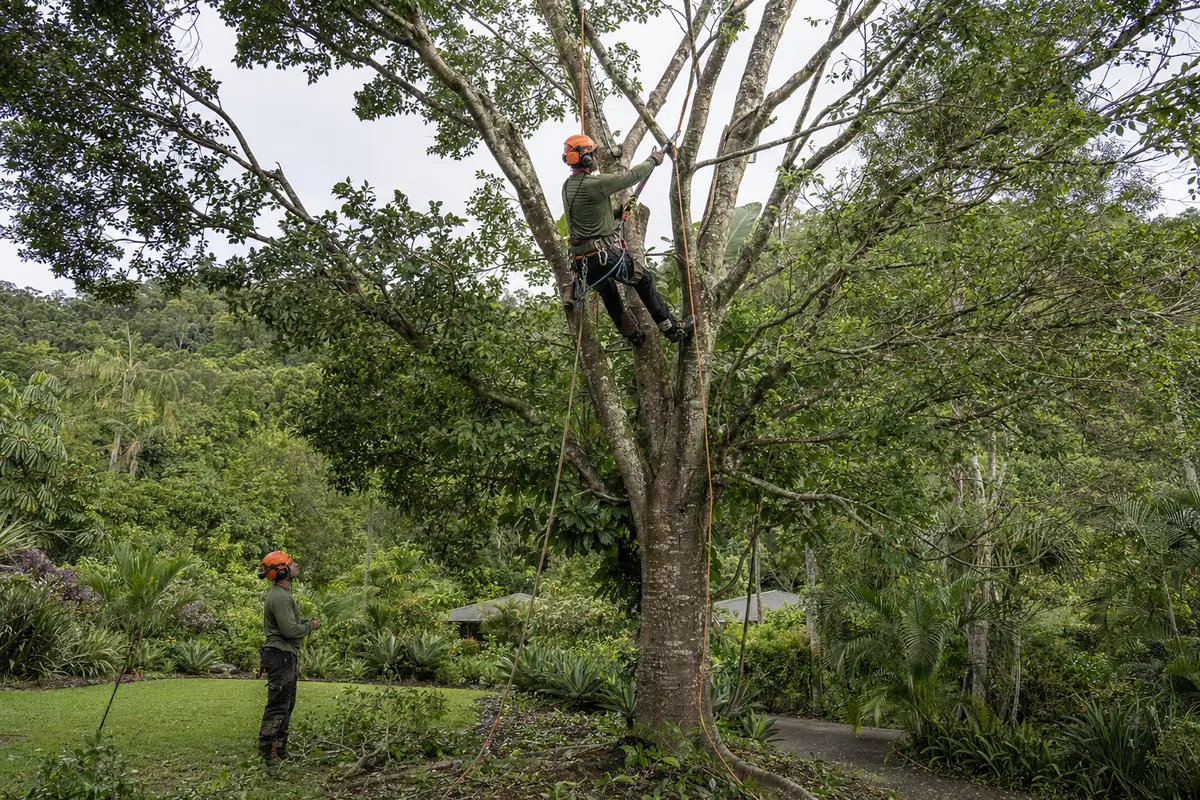
Buildings, roads, neighbours, powerlines, tanks and established gardens are known as targets in a tree-risk context. The more valuable or vulnerable the surroundings, the more control the crew may need over each cut section. That can mean climbing, rigging, cranes, traffic control or network coordination.
A clear drop zone reduces handling. Where there is no drop zone, material may be lowered, transferred and processed in many small pieces. That time is reflected in a responsible quote.
What happens after the tree is down
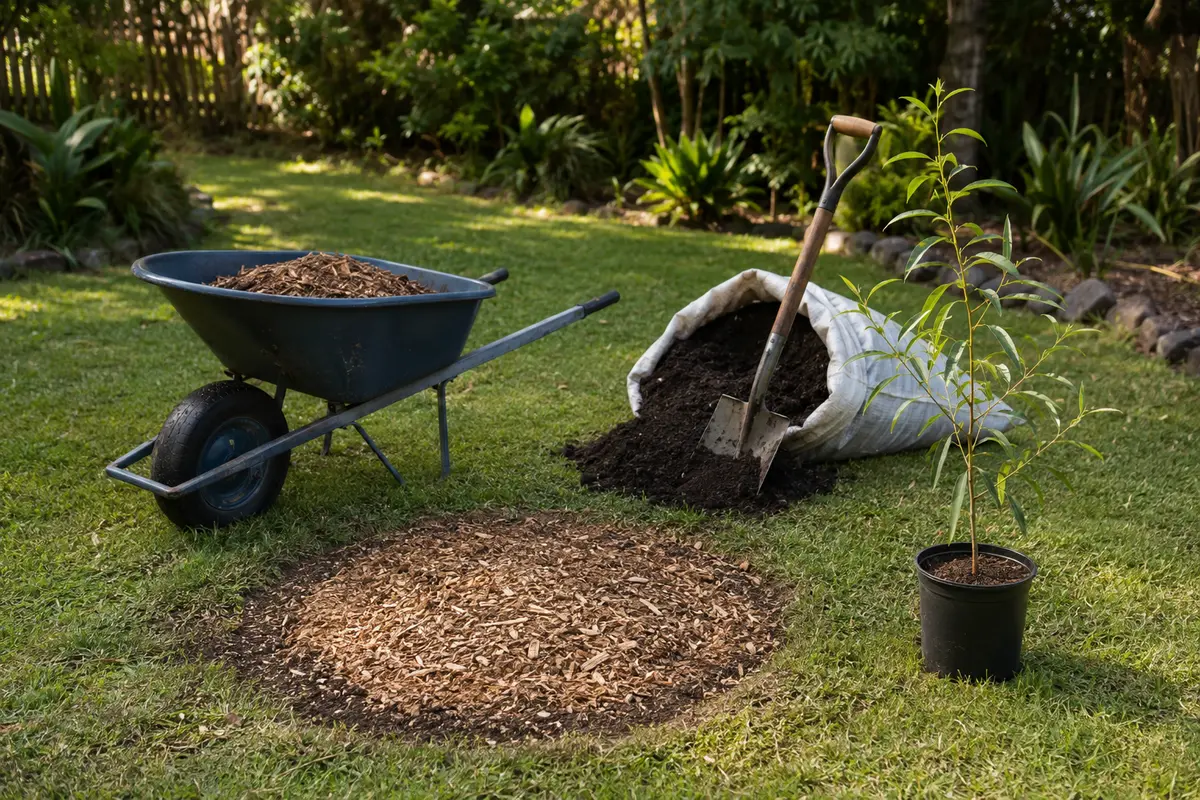
Removal of the standing tree does not necessarily include stump grinding, log removal, firewood splitting or complete sawdust removal. Mulch can occupy more space than expected, and large trunk sections may require specialist loading or disposal.
Decide whether you want mulch retained, suitable logs left in manageable lengths or all material removed. Specify where retained material can be placed and whether the stump must be ground below lawn level or deeper for landscaping.
Practical checklist
✓ Tree and branches clearly identified✓ Stump treatment stated separately✓ Mulch, logs and waste destination explained✓ Access and property-protection assumptions recorded✓ Permits or third-party costs allocated✓ Insurance and payment terms clearComparing quotes on equal terms
The lowest total is not necessarily the same service. One quote may include stump grinding, waste removal and traffic control while another covers only removal to ground level. Compare the described outcome, exclusions and who carries responsibility for approvals.
Ask how unexpected conditions will be handled. A professional quote should be clear enough that both parties can identify the trees, the result and the clean-up standard without relying on memory.
KEEP EXPLORING
Advice connected to local help
COMMON QUESTIONS
Questions about this topic
Can I get an exact price from photos?+
Photos may support an initial estimate, but difficult access, tree condition and nearby hazards can require an on-site check before a fixed quote is sensible.
Is stump grinding normally included?+
Not automatically. Tree removal commonly finishes near ground level, while stump grinding is a separate operation that should be listed in the scope.
Does wet weather affect the quote or schedule?+
It can affect machine access, turf protection and safe climbing. Discuss whether the price assumes dry access and what happens if the ground is saturated.
TALK ABOUT YOUR TREE
Get advice for the actual site
Share the suburb, tree, access and what has changed so the next step can be assessed properly.
Contact us →