1. Fresh cracks or splits
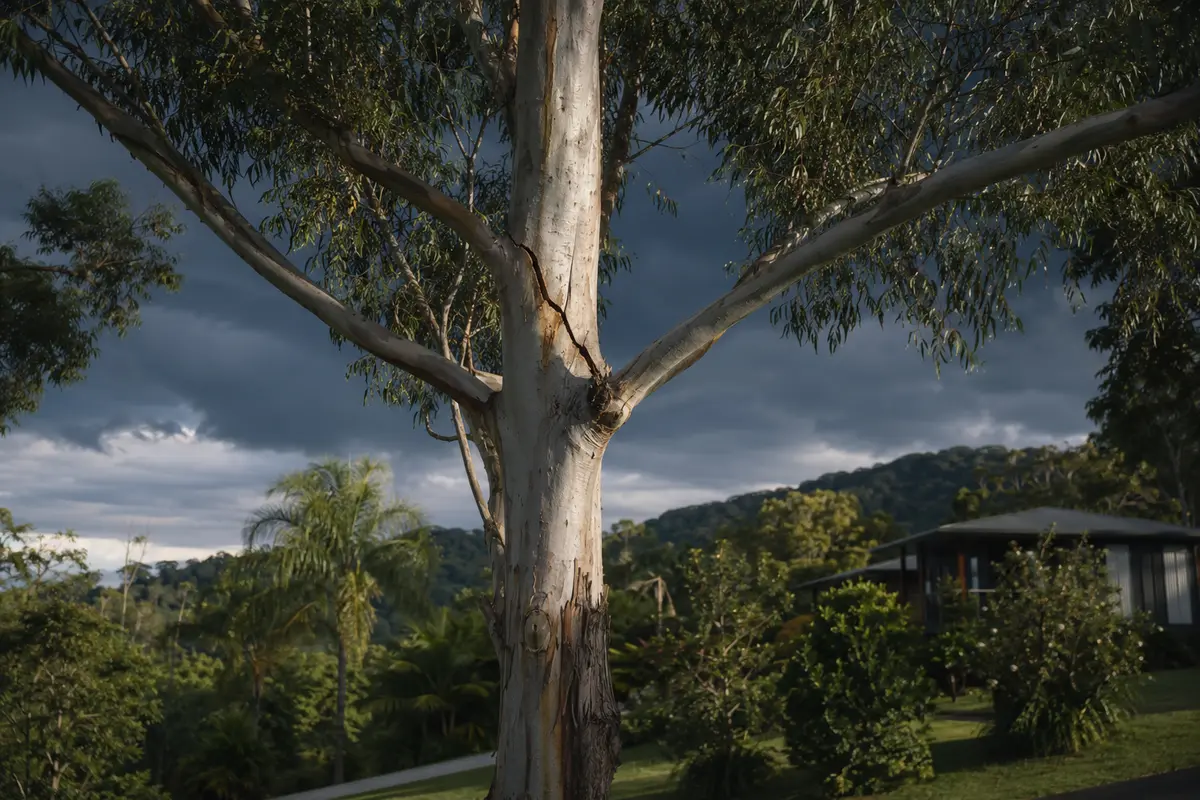
Look from a safe distance at the places where major limbs join the trunk. A fresh split may show pale timber, torn bark or a dark line that appears wider after wind. Co-dominant stems—two large upright stems arising from the same point—can sometimes develop included bark and a weaker connection. Not every fork is unsafe, but a change in that union deserves assessment.
Never climb the tree or pull on a damaged limb to test it. Photograph the feature from the ground, keep people and vehicles away from the likely fall area and explain whether the change appeared after a storm.
2. Hanging, broken or unusually low branches
A branch can break and remain caught in the canopy. These suspended limbs may be difficult to see among foliage and can move without warning. Also note branches that have dropped lower over a roof, driveway or play area since your last inspection, especially after prolonged rain when foliage and timber are heavy.
Do not stand beneath a hung branch for a closer photograph. Use zoom from outside the potential drop zone and arrange prompt advice where people routinely pass below.
3. A noticeable change in lean
Many healthy trees grow on an angle. The important clue is change: a lean that appears new, soil lifting on one side of the trunk, roots tearing or a gap forming around the base. Saturated ground can reduce root anchorage, and changes may become visible after wind or nearby excavation.
Compare current photographs with older property photos if available. A newly leaning tree near a house, road or powerline should be treated more urgently than a long-established lean in open space.
4. Fungal growth, cavities or decayed timber
Fruiting bodies around the trunk or root zone can indicate fungal activity, while cavities and soft timber may show that decay is present. Their significance depends on location, extent and the amount of sound wood remaining. A hollow tree is not automatically condemned; some retain adequate structure and habitat value.
Avoid scraping, drilling or filling cavities yourself. Those actions can damage living tissue and provide little reliable information about internal strength. A suitable assessment considers both the defect and what could be struck if the tree or part of it failed.
5. Canopy decline or sudden dead foliage
Sparse growth, dead branch tips or a section of canopy changing colour can result from drought stress, waterlogging, root damage, pests, disease or natural seasonal response. Sudden decline across one major limb is especially worth recording.
Check whether recent trenching, paving, soil filling, compaction or chemical use occurred near the tree. Root-zone changes are useful context for an arborist and may explain symptoms that pruning alone will not solve.
Practical checklist
✓ Inspect from the ground after severe weather✓ Take wide and close photographs without entering a drop zone✓ Record when the change first appeared✓ Keep children, pets and vehicles away from suspected hazards6. Root-zone disturbance
Construction, drainage work and vehicle traffic can cut or compact roots even when the trunk looks untouched. Note trenches, new retaining walls, raised soil levels and repeated machinery movement beneath the canopy. Roots need oxygen as well as moisture, and damage close to the trunk can affect both health and stability.
7. Repeated branch failure
Finally, treat repeated branch shedding as a pattern worth investigating. One small twig after wind is normal; several substantial failures from the same tree may indicate poor branch attachments, decay, excessive end weight or exposure changes after neighbouring trees were removed.
KEEP EXPLORING
Advice connected to local help
COMMON QUESTIONS
Questions about this topic
Can I tell from a photo whether a tree is safe?+
Photos can help triage an enquiry, but they rarely show internal condition, root anchorage or the full target area. A site inspection may be necessary for a reliable recommendation.
Should I prune a tree immediately before a storm?+
Last-minute cutting is not automatically safer and rushed work can introduce new hazards. Arrange planned assessment and pruning well before forecast severe weather where possible.
What if a branch is touching a powerline?+
Keep clear and contact the electricity network operator. Do not touch the tree, branch, fence or equipment that may be energised.
TALK ABOUT YOUR TREE
Get advice for the actual site
Share the suburb, tree, access and what has changed so the next step can be assessed properly.
Contact us →